
Project № 07
Lloyds Banking
Representative Access Journey — the North Star Vision for how 65,000 people serve vulnerable customers.
This case study is gated. Enter the access key to view Lloyds Banking in full. Access persists for the rest of this session.
Representative Access Journey — the North Star Vision for how 65,000 people serve vulnerable customers.
The Representative Access Journey is the path Lloyds Banking customers follow when they can no longer manage their accounts alone — and someone else must. Carers, family members, court-appointed deputies, power-of-attorney holders. It is one of the most emotionally loaded service moments a high-street bank has, and in 2021 it was also one of the most fragmented.
I joined Lloyds Banking Group's Fraud and Disputes department as Senior UX Designer to lead the design of a single, unifying service vision across multiple teams, multiple systems, and multiple regulators. The output would become Lloyds' North Star Vision for how 65,000+ colleagues would serve representative-access customers.
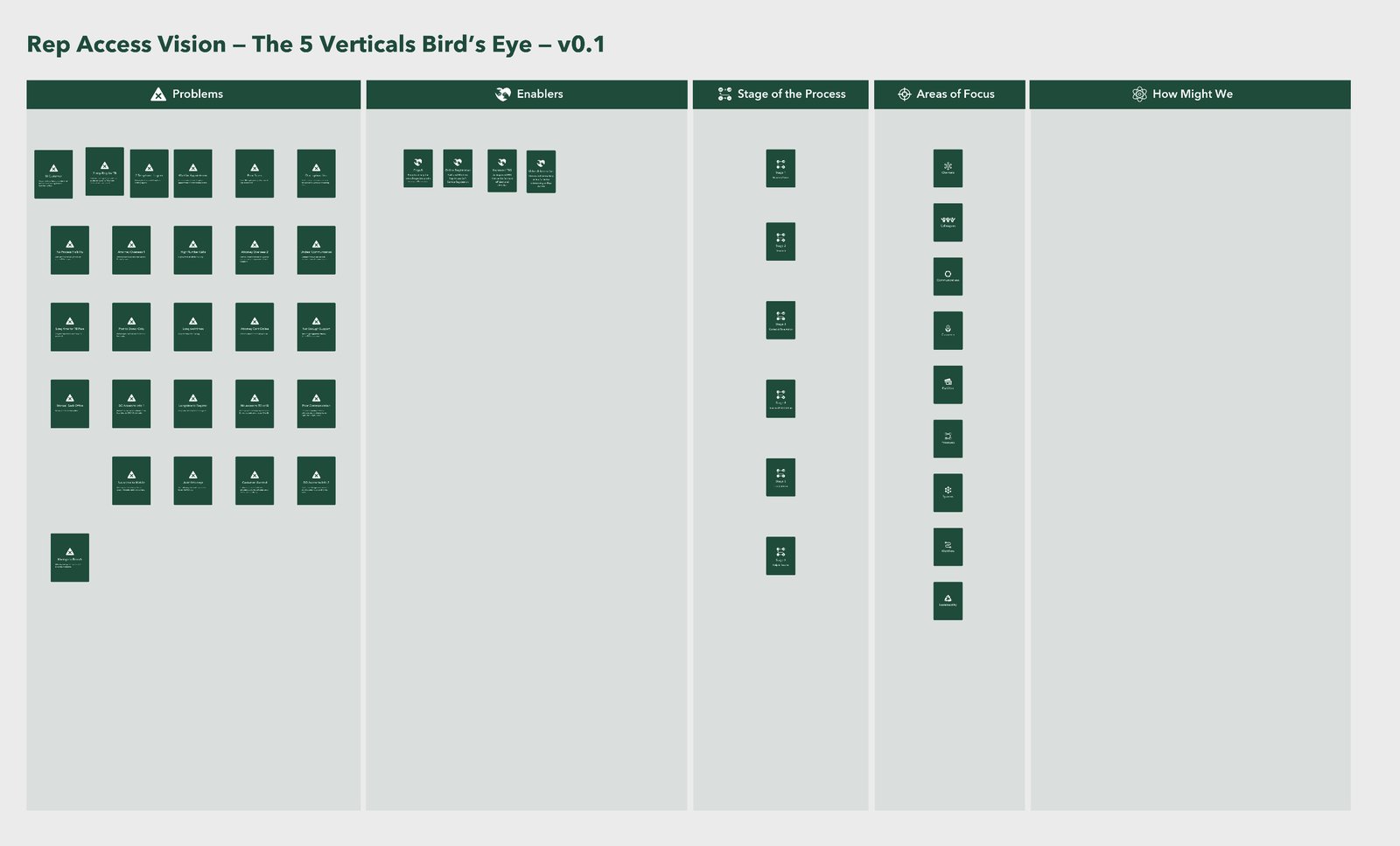
The customer's journey crosses five internal verticals at Lloyds — Retail, Wealth, Operations, Fraud and Disputes, and Customer Service — and each vertical owned its own piece of the process with its own tools, language, and metrics. The customer, of course, saw none of this. They saw a single bank that kept making them repeat themselves, verify twice, and wait.
The operational cost was enormous. The emotional cost was worse. A vulnerable customer calling during a bereavement, or a carer trying to register as a third party, could not afford the friction.
The design question was framed deliberately: "what would a swift, effortless representative access journey look like, if we designed it as one service instead of five"? The answer had to be credible to product owners, operations teams, legal, risk, and the executives writing the strategy for the next three years.
Workshops and interviews across all five verticals, mapping who owned what and where the customer's journey actually broke. Surfaced the language mismatches, the duplicated controls, and the handoffs nobody owned.
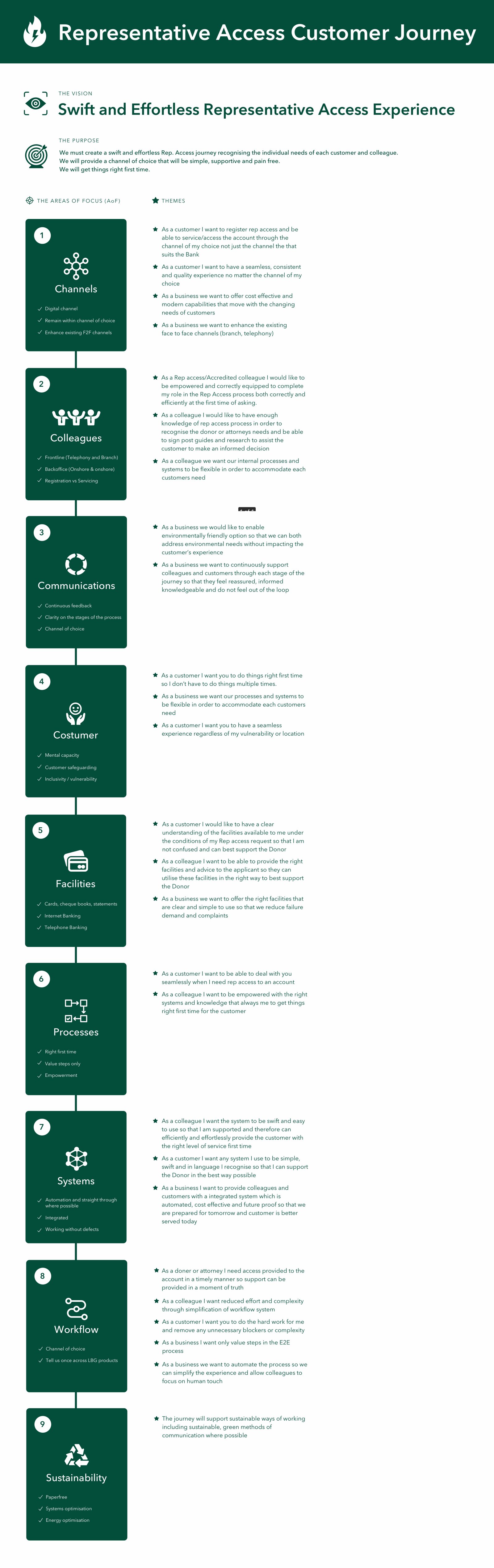
Built the complete service blueprint — frontstage, backstage, supporting systems — for the representative access journey end-to-end. The blueprint became the shared artefact every team could point to.
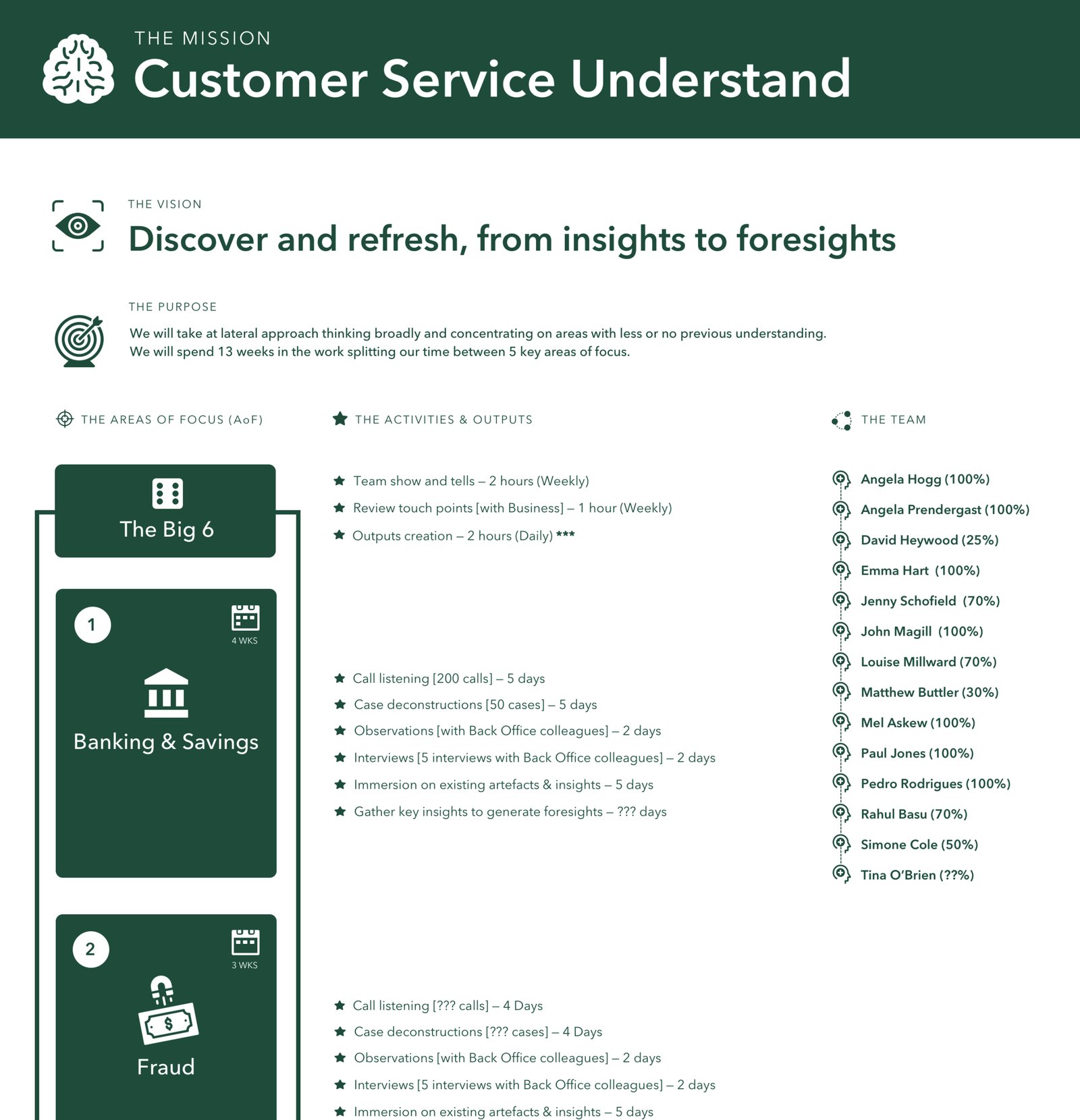
Authored "The Swift and Effortless Representative Access Journey" as the North Star Vision — a visual, narrative document that showed exactly what a unified service would look and feel like, framed for customers and for the Customer Service "Understand" team mission.
Walked the vision through product owners, operations leadership, and C-level sponsors — the artefact that gave them permission to invest in the cross-vertical fix instead of the five local fixes.
Swift and effortless — two words that do a lot of work when the customer on the other end is already carrying enough. — Rep. Access North Star Vision
Selected pages from the North Star Vision document, the five-verticals bird's-eye view, and the customer journey blueprint.

Strategic outcomes — the engagement delivered the North Star that gave Lloyds permission to invest in the unified journey.
The North Star Vision did not change a single line of code on its own. What it did was give the organisation permission — permission to stop funding five parallel local fixes and start funding the one cross-vertical redesign that would actually serve the customer. That is what a vision artefact is for in a big bank.
The second lesson was about vocabulary discipline. When five verticals describe the same thing with five different words, they cannot make decisions together. The workshop work that forced one shared language was the unglamorous half of this engagement, and also the most valuable. Read 5 referrals from this role on LinkedIn →