
Project № 08
Fraud Triage MCP
Redesigning how Lloyds colleagues triage fraud — in moments of heightened emotional intensity.
This case study is gated. Enter the access key to view Lloyds Banking in full. Access persists for the rest of this session.
Redesigning how Lloyds colleagues triage fraud — in moments of heightened emotional intensity.
The Fraud Triage MCP is the primary internal tool Lloyds' Customer Service representatives use when a customer calls to report a suspected fraudulent transaction. It is the place where the bank decides, in seconds, whether a payment is genuine, whether to block, whether to escalate, and whether to refund. Every choice has downstream consequences — for the customer, for the bank, and for the rep on the other end of the line.
I joined as part of the Fraud and Disputes design team to redesign the experience across both the customer representative interfaces and the underlying workflows — integrating fragmented systems, simplifying the triage flow, and making fraud resolution faster and more trustworthy in moments of heightened emotional intensity.
The original Fraud Triage MCP had grown over years of incremental fixes. Customer Service reps were switching between multiple legacy systems, re-keying information, and making high-stakes decisions with incomplete context on the screen. The customer on the phone could hear every pause.
The real challenge was emotional design. These calls are not neutral. A customer who has just seen £600 leave their account does not want to hear "bear with me while I open another tab". The tool had to hold its own composure so the rep could hold theirs.
The research showed the friction was not in the individual screens — it was in the handoffs between them. The flow had to be integrated, the decisions had to feel informed, and the escalation paths had to be one click away when the call stopped being recoverable.
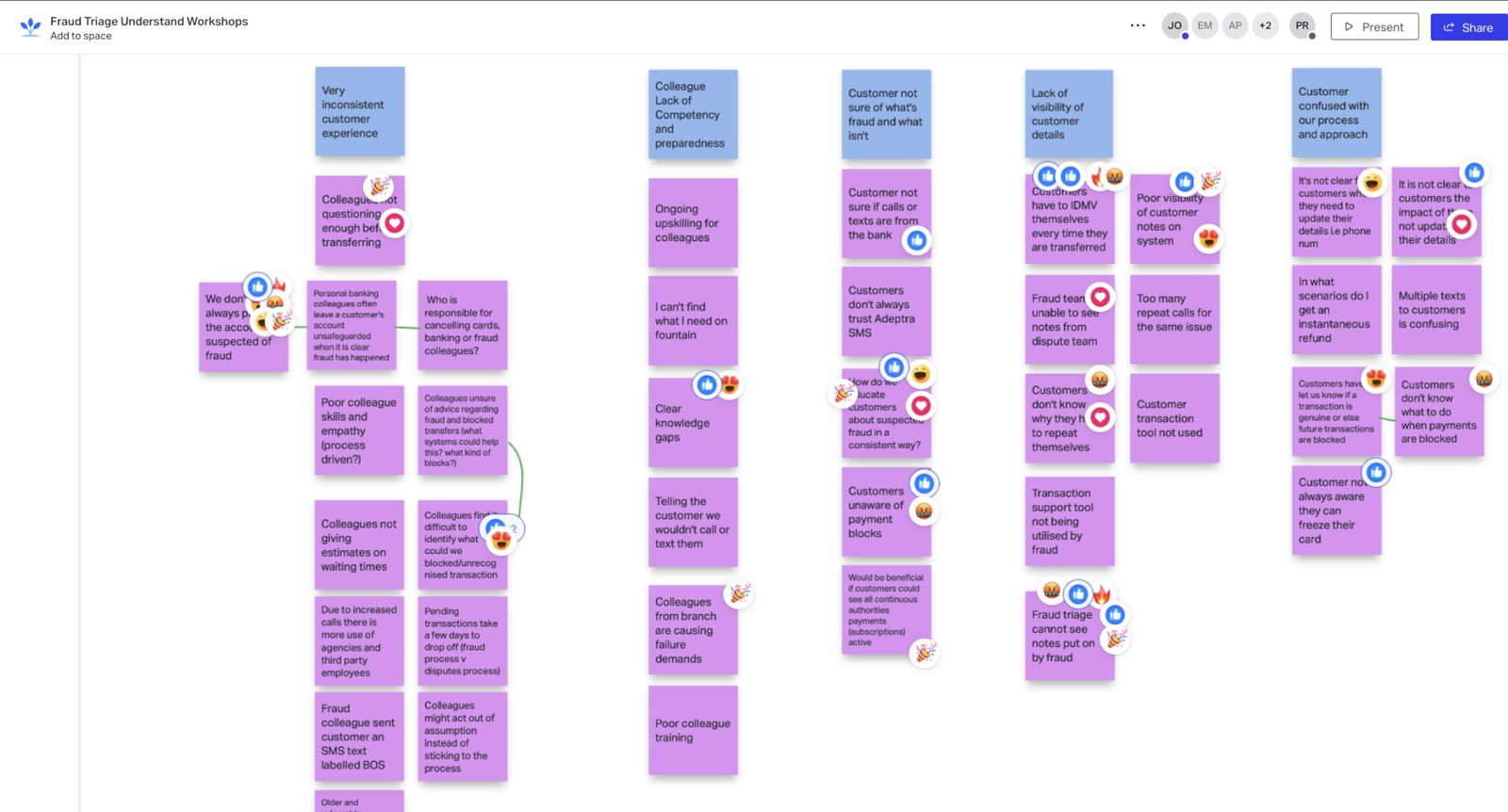
Ran the Call Listening research programme for Customer Services Understand — hours of real fraud calls, transcribed, tagged, and synthesised into the master file that shaped every subsequent design decision.
Extensive Customer Service Representative interview series — the Daniel B series alone ran across 10+ sessions — to understand how reps actually use the tool, what they work around, and what they wish was different.
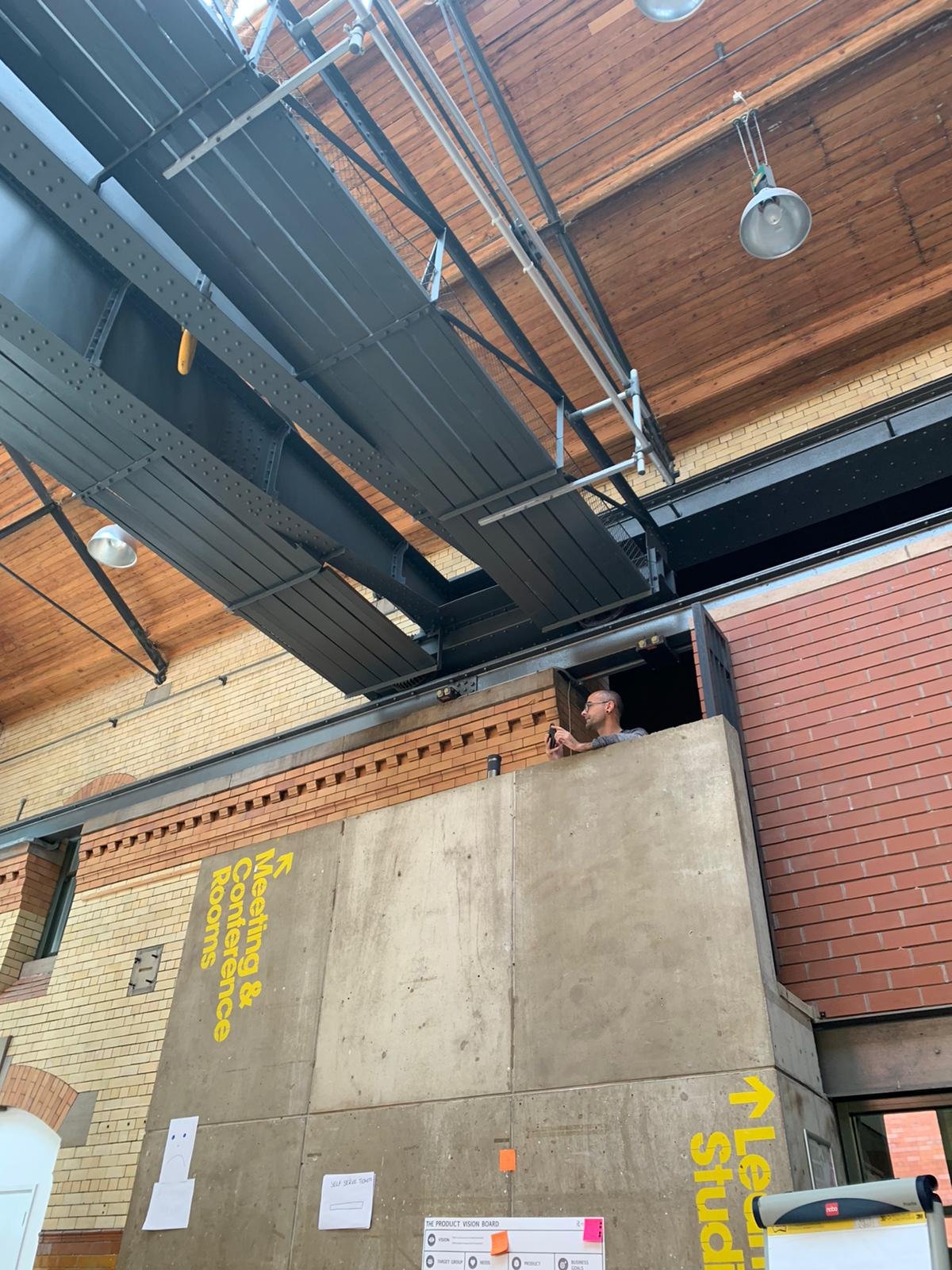
Ran the FreqStress Matrix workshop in Chester and the Lab Away Day with UX Theatre in Manchester — bringing together Fraud & Disputes product, ops and tech to co-design the new triage flow in the room.
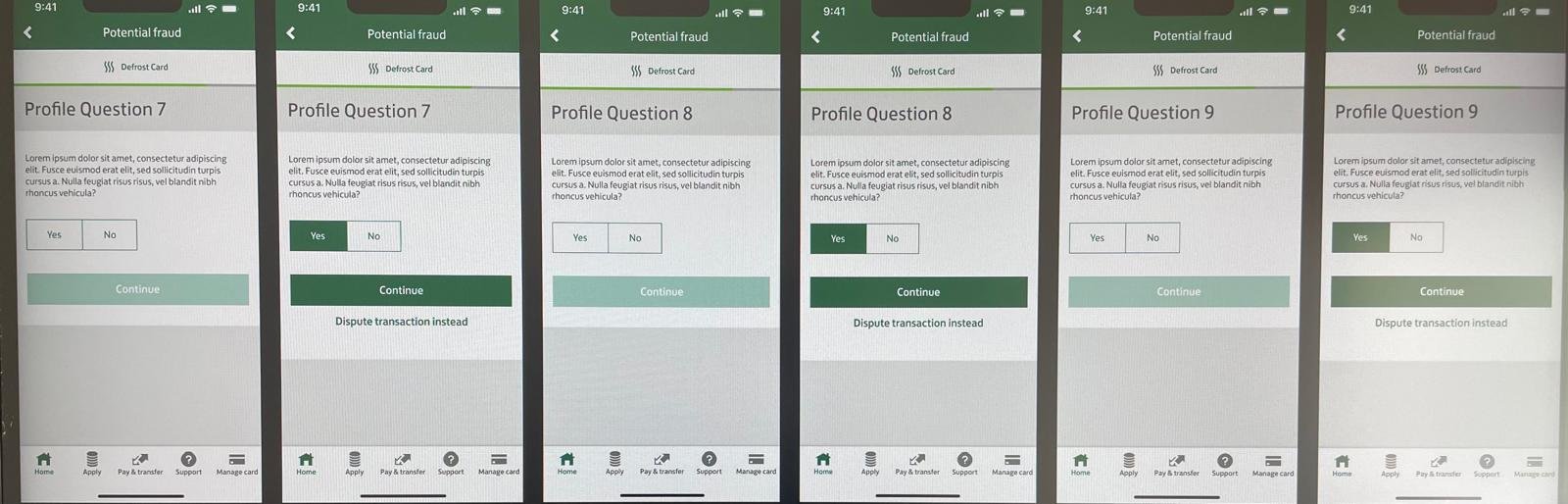
Designed the new fraud triage screens — profiling potential fraud, handling customer responses, guiding the rep through the triage decision tree — and shipped them against Lloyds' internal design system.
In moments of heightened emotional intensity, the tool has to hold its own composure so the person using it can hold theirs. — Fraud & Disputes design brief
Selected frames from the Fraud Triage MCP redesign, the profiling flow, and the on-site workshops that shaped the approach.


Internal-only tool in a regulated environment — metrics are not publicly disclosed. What follows is what the engagement delivered.
You cannot design a fraud triage tool without sitting with the calls. Every design assumption I walked in with broke on contact with a real customer in a real bad moment. The call listening research wasn't a phase — it was a habit that never stopped. Every new screen got tested against "does this help the rep hold the room, or not".
The workshops — Chester, Manchester — were where the shipped tool was actually born. Read 5 referrals from this role on LinkedIn →