
Project № 15
UBS SmartWealth
Digital wealth management for first-time investors — designed, tokenised, and led across three cities.
This case study is gated. Enter the access key to view UBS in full. Access persists for the rest of this session.
Digital wealth management for first-time investors — designed, tokenised, and led across three cities.
UBS launched SmartWealth in 2016 to bring digital wealth management to individuals earning between £50,000 and £100,000 — a segment UBS's traditional private banking arm had never served. The product had to educate first-time investors, offer tailored planning tools, and make a historically intimidating category feel approachable.
I contributed as Lead UI Designer during a three-month engagement via HealthELSE Agency, with design leadership over the UI team and direct ownership of the UBS SmartWealth Design Toolkit that held the platform's visual language together.
The incumbent wealth management experience — dense tables, jargon, printed reports — was the exact opposite of what SmartWealth's audience wanted. These were ambitious professionals who had never set foot in a private bank and had no intention of starting now. They needed planning tools that spoke their language, dashboards they could understand in seconds, and a product that treated them like adults without bludgeoning them with terminology.
The brand constraint was that SmartWealth still had to feel like UBS — premium, trustworthy, substantive — so the design had to borrow the confidence of a private bank without the stuffiness.
The operational challenge was team distribution. Designers, researchers and developers across Basel, London and Warsaw, all contributing to one product, all moving fast under executive pressure. The role required design leadership as much as individual craft.
Managed a team of 10+ specialists across UI, visual design and design systems. Set the visual direction for the SmartWealth application, reviewed work from each city, and kept the output consistent.
Transformed scattered style guides into a reusable, component-based design system — the SmartWealth Design Toolkit — consumed by designers in all three cities and by the engineering team.
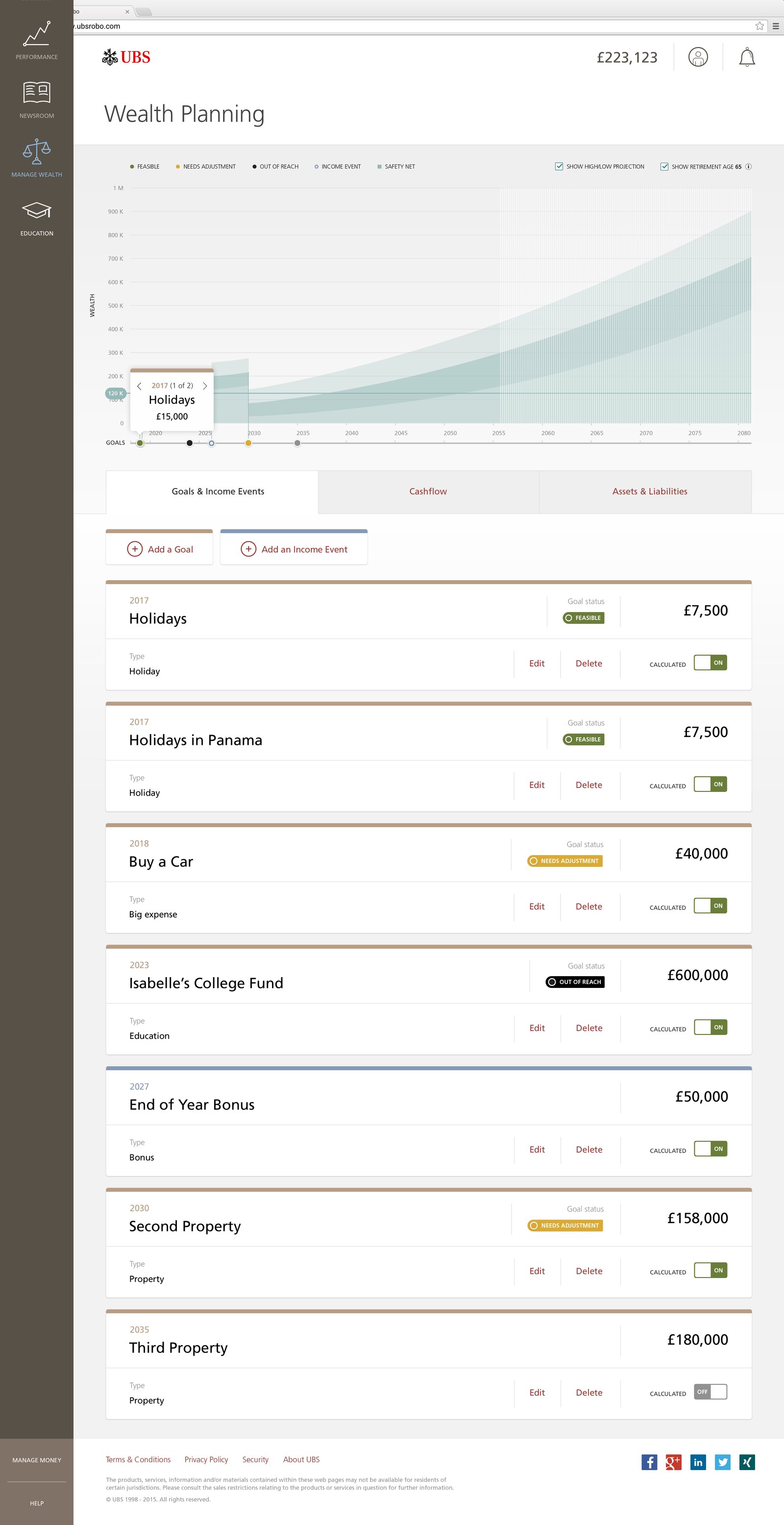
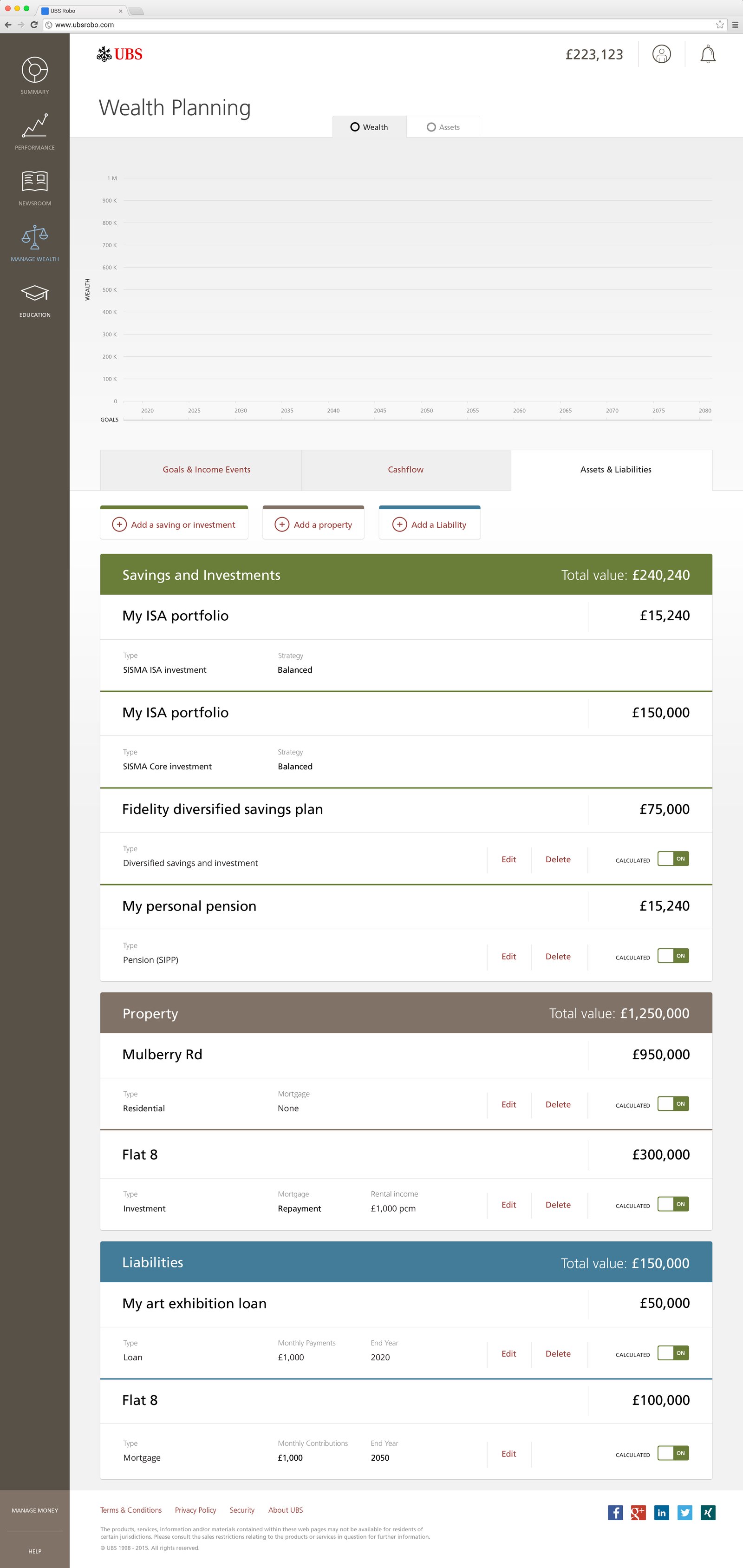
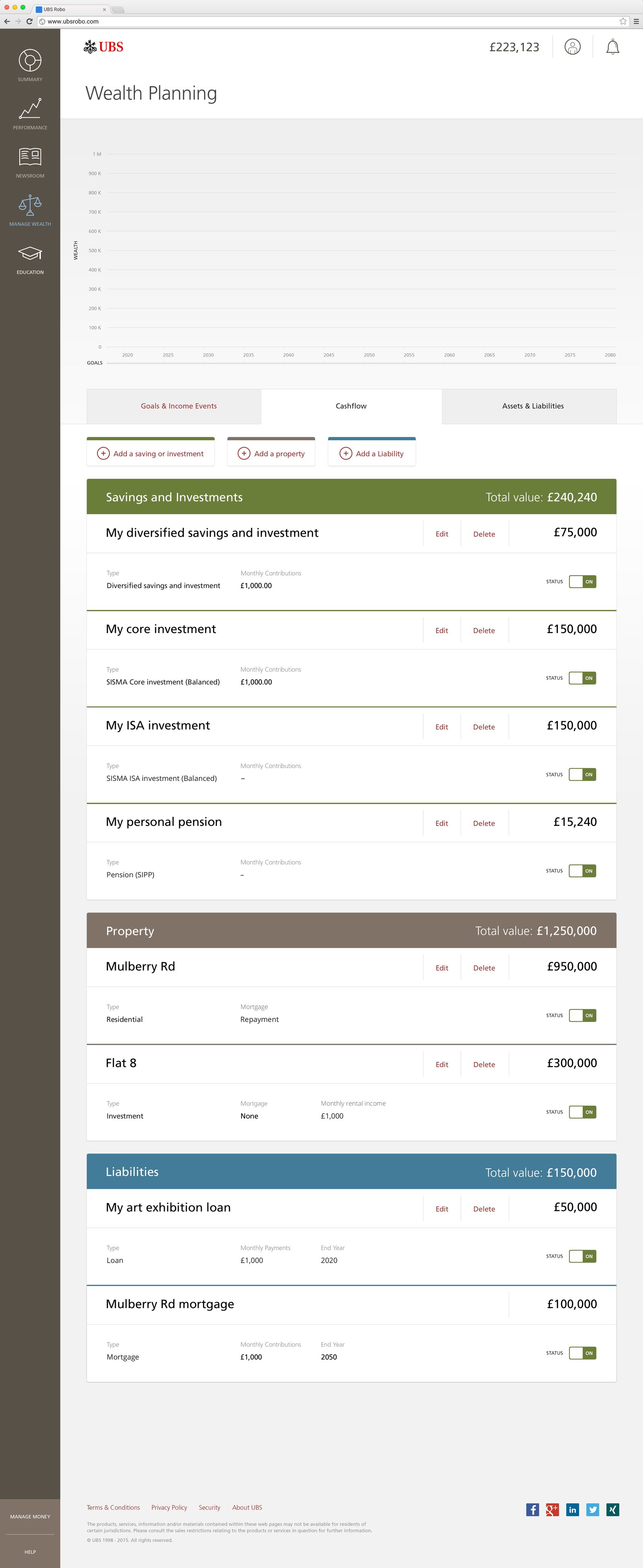
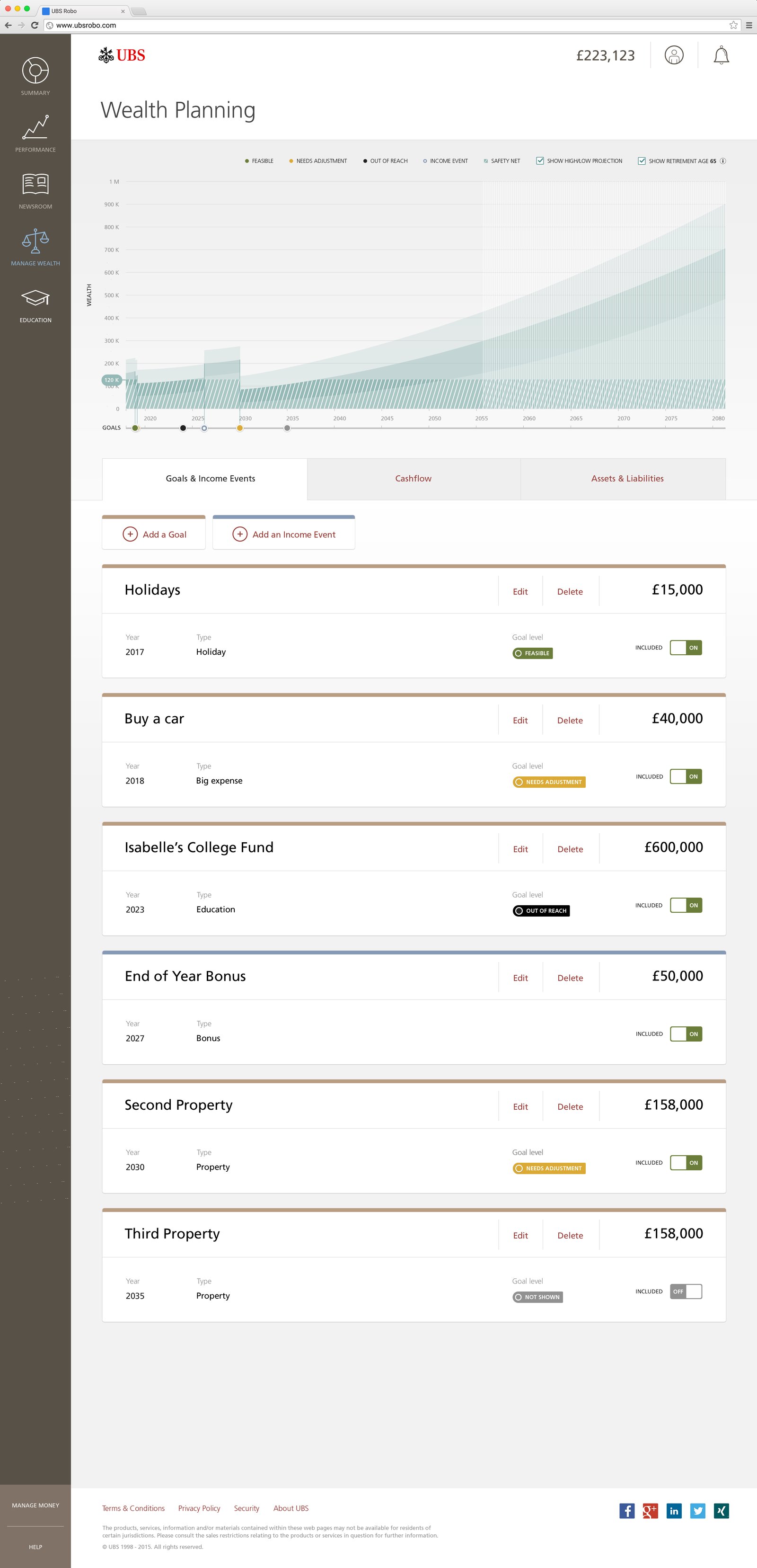
Designed the full application across desktop and mobile, with wealth-planning tools, personalised advice flows, and a dashboard that turned complex financial data into something a first-time investor could act on.
Coordinated with designers, researchers, developers and stakeholders in Basel, London and Warsaw — the design system being the surface where all three teams actually agreed.
Although SmartWealth was discontinued in 2018, its technology was acquired by SigFig — the platform's ideas outlived the brand. — SmartWealth engagement reflection
Selected screens from the SmartWealth wealth planning module — goals, assets, cashflow, and the responsive mobile view.

SmartWealth launched in late 2016 and was discontinued in 2018 — but the platform was acquired by SigFig, carrying the design work forward.
SmartWealth was the first time I really understood what a design system is for. The product itself was discontinued in 2018 — but the toolkit, the components, the patterns, the rationale — they all carried forward when SigFig acquired the technology. That is what a good design system does: it lives longer than the brand that commissioned it.