
Project № 09
HSBC
Redesigning signatory workflows for global business banking — compliance-native, cross-regional, customer-first.
This case study is gated. Enter the access key to view HSBC in full. Access persists for the rest of this session.
Redesigning signatory workflows for global business banking — compliance-native, cross-regional, customer-first.
HSBC's Commercial Banking (CMB) Mandates product is the surface where every legal signatory on a business account is added, edited, and removed. Every limited company, LLP, sole trader and partnership eventually touches it — and every change has to survive a compliance regime built on KYC, PEP screening, beneficial ownership and multi-jurisdictional sign-off.
I joined as the UX designer to redesign the mandate management journey end-to-end: user flows, wireframes, pixel-perfect interfaces, and the workshops that turned fragmented stakeholder conversations across the UK, US, Canada and Hong Kong into one coherent design direction.
Most banking tools treat compliance like a form gate: screens of disclosures bolted onto the end of a flow, disconnected from the actual work. That was the default for CMB Mandates too — and it was failing both sides of the transaction.
Business customers were abandoning half-completed requests. Internal operations teams were reworking submissions by hand. Regulatory requirements around politically exposed persons, identity verification, and beneficial ownership were being manually reconciled across regions because the product didn't encode them natively.
The design question I had to answer was not "can we make this prettier" — it was "can compliance itself be the primary UX, and still feel like a calm service". Every entity type behaves differently. Limited Companies and LLPs need board resolutions. Sole Traders need simpler flows with third-party mandates. Partnerships need unanimous member consent. One screen, six legal structures, four countries of regulators.
The success bar set by the product owners was explicit: one consistent experience globally, without sacrificing the regional obligations of any jurisdiction.
Remote interviews and workshops with stakeholders in London, New York, Toronto and Hong Kong to surface regulatory edge cases, language mismatches, and the real shape of each entity's signatory model. No assumption about "the UK flow" survived contact with the US KYC team.
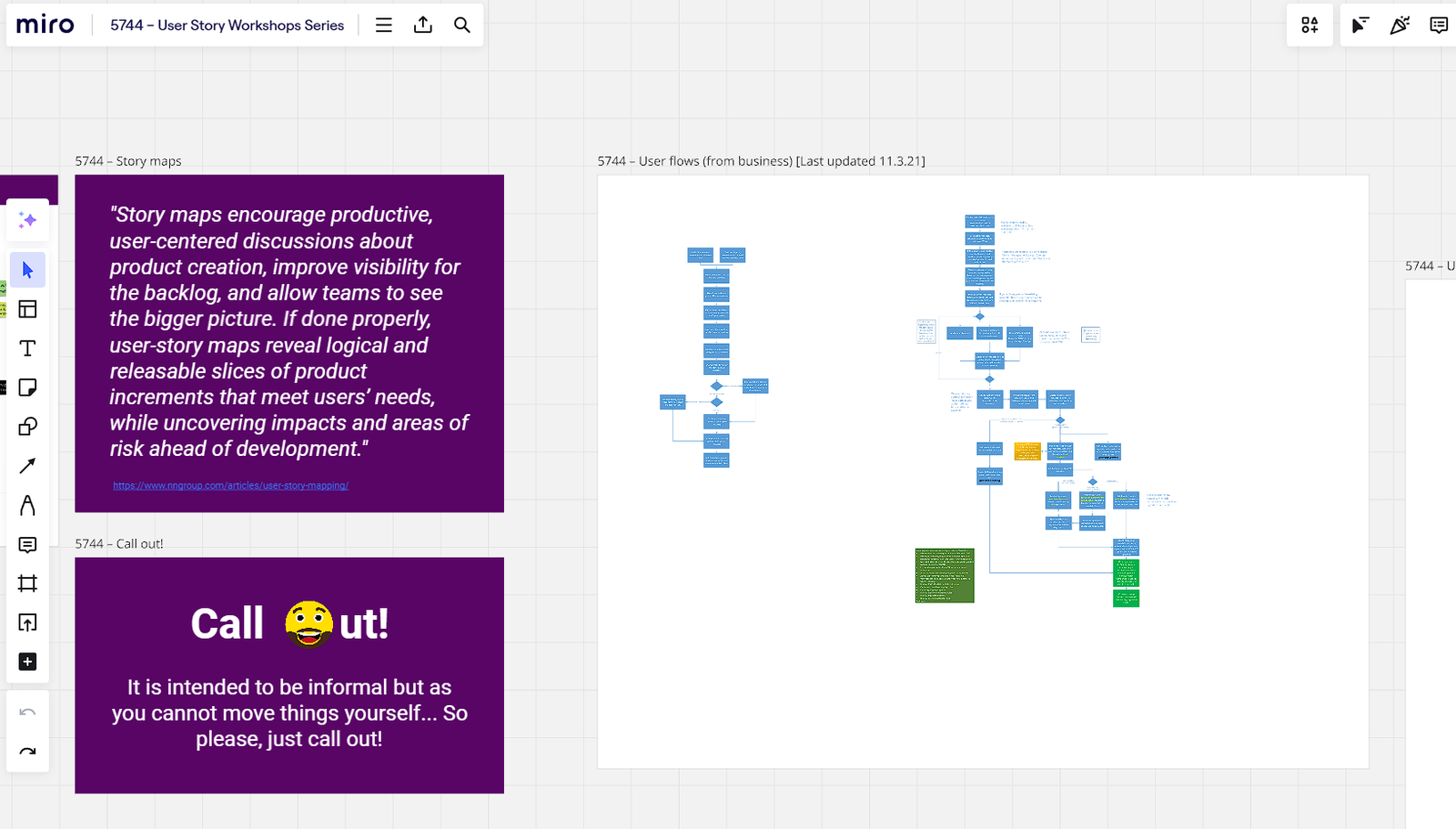
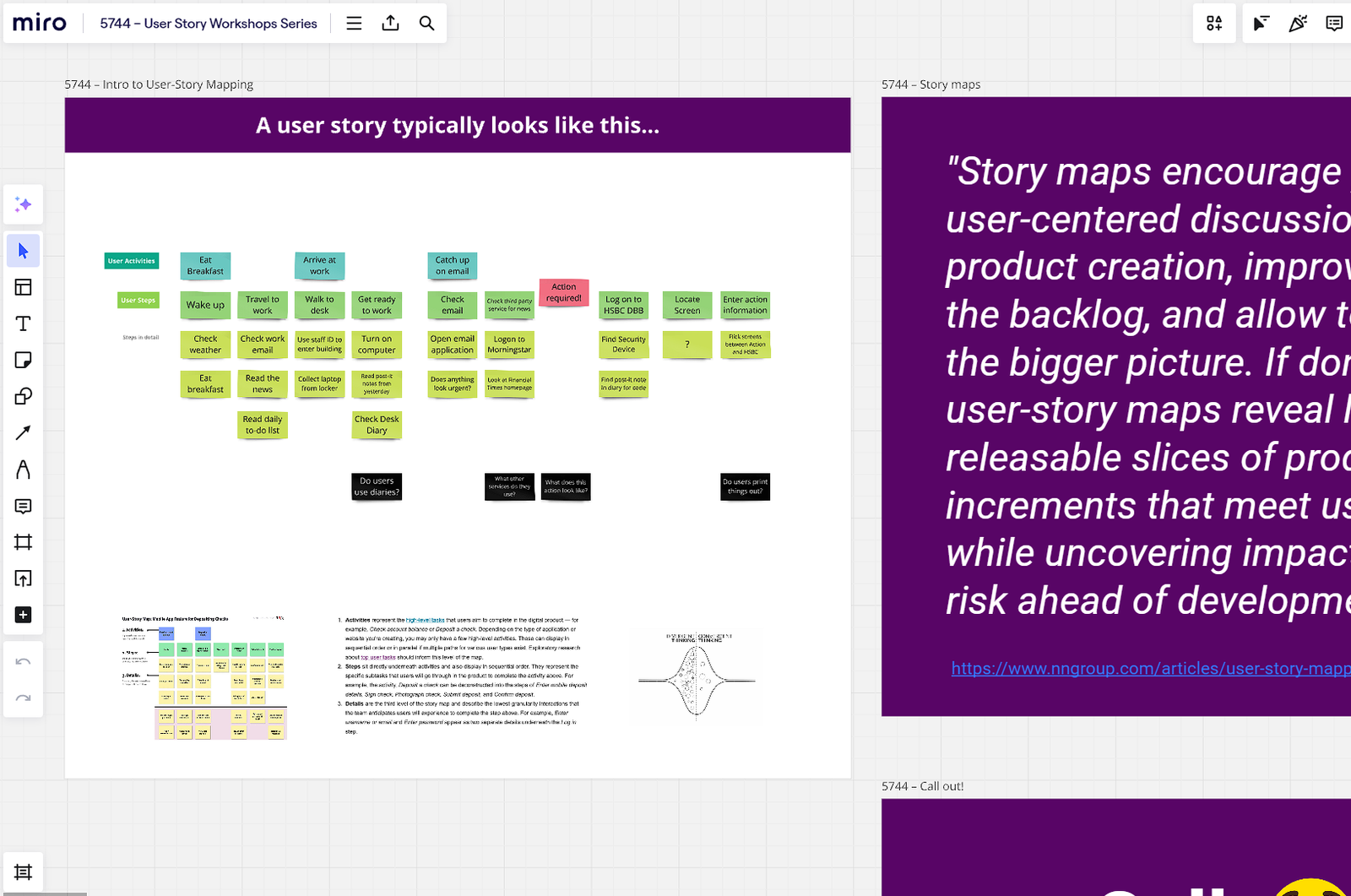
Story-mapping sessions with product, legal, and ops — building the complete journey for each of the six entity types in parallel, so the team could see where flows converge and where they must diverge. This became the single source of truth product and engineering argued against for the rest of the engagement.
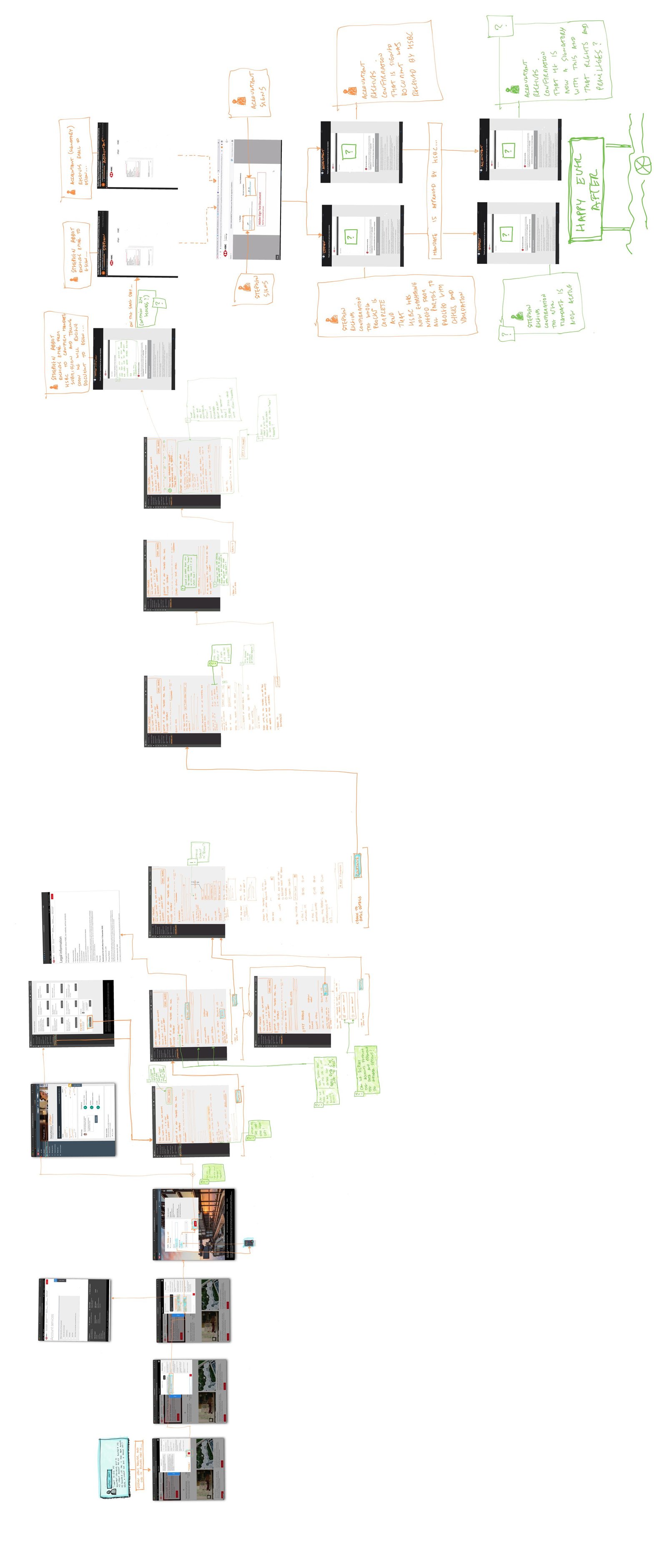
Low-fidelity wireflows to test the logic of the whole service before any pixel was set. Specific attention to cognitive load around the signing rules builder — the riskiest screen, where finance thresholds and multi-signatory approvals get authored.
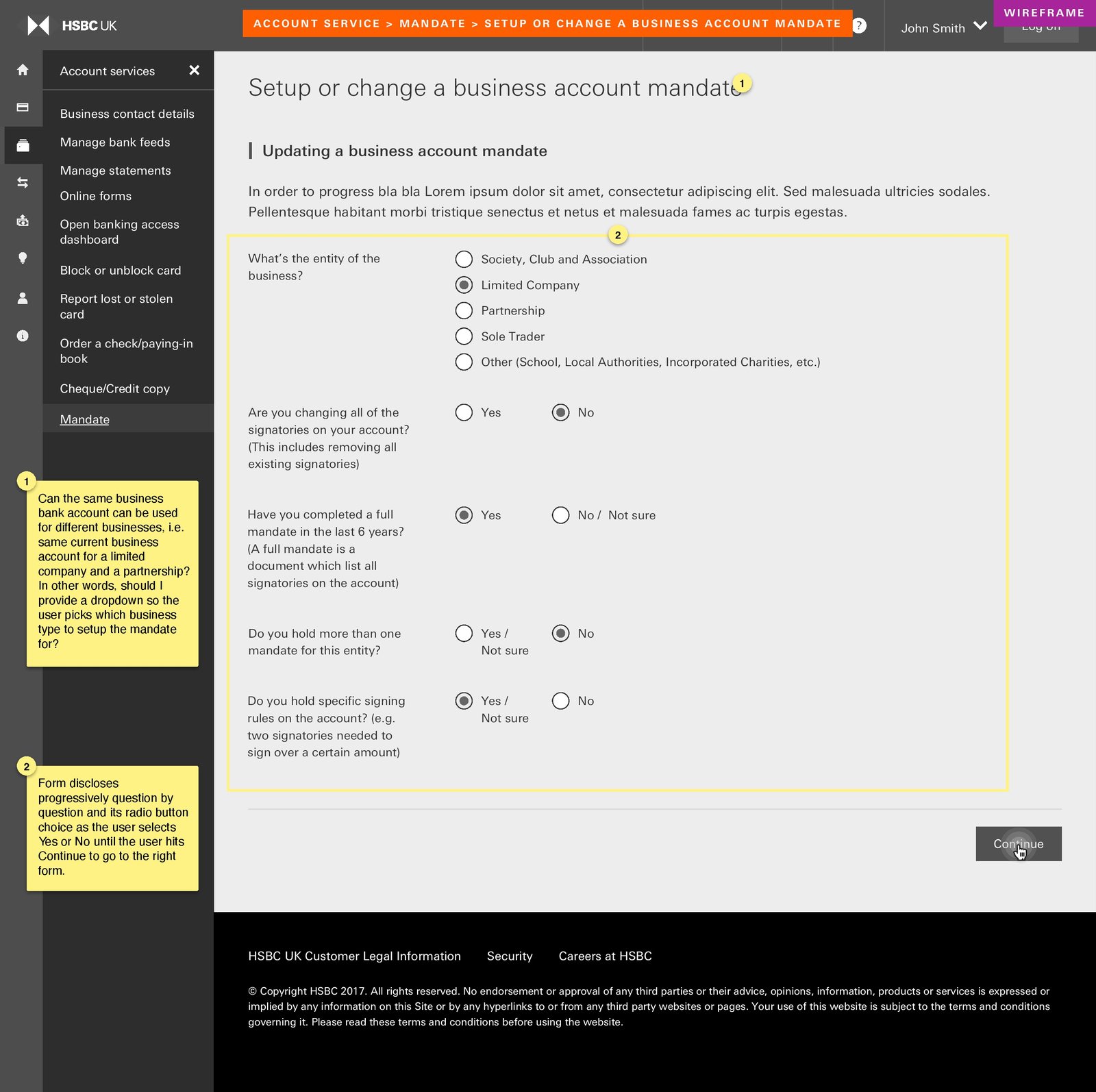
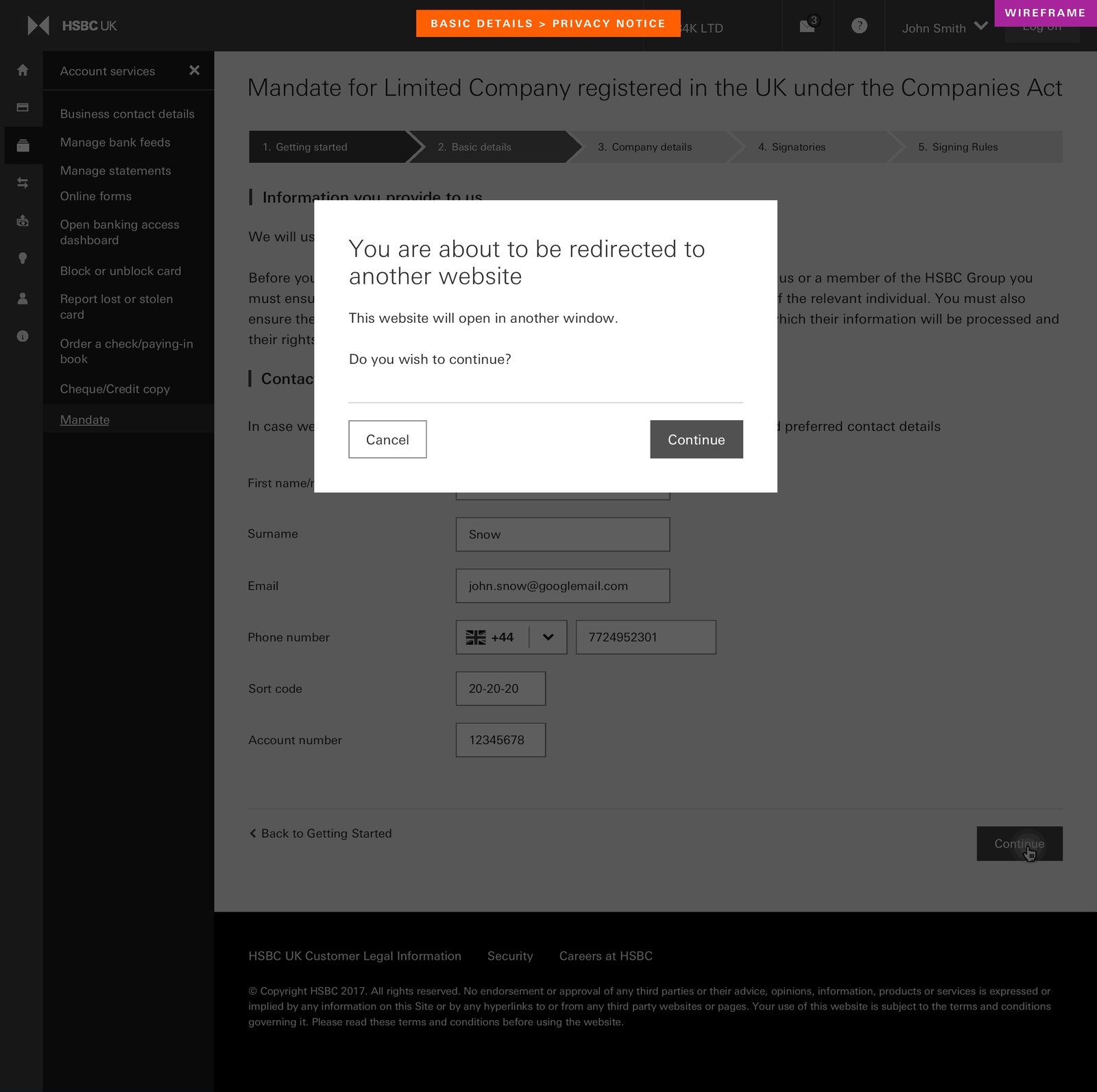
Over 30 pixel-perfect wireframe and visual design pages covering signatory add / modify / delete, SCA, errors, empty states, tooltips, and the delete confirmation flows. All built against HSBC's CMB Corporate Browser Toolkit so engineering could consume components directly.
The solution had to be secure, scalable, and globally consistent — while still handling the specific needs of every business entity we serve. — HSBC CMB Mandates · Product direction
Selected pages from the user story mapping series, wireframe library, and the master wireflow that held the whole service together.
Qualitative outcomes — the product shipped into a regulated environment where public metrics aren't disclosed. What follows is what the engagement actually delivered.
The lesson CMB Mandates taught me is the one I carry into every regulated-industry engagement since. In banking, compliance is not the tax on the design — it is the design. The best work I did on HSBC was to stop treating KYC, PEP, and beneficial ownership as gates in the flow and start treating them as the shape of the flow itself.
The second lesson was about listening at distance. Four time zones, five regulators, dozens of stakeholders, zero in-person sessions. The story mapping series was the thing that held everyone together — not because it was beautiful, but because it was the one surface where every region could argue in the same grammar.
This project sits on my shelf as a reminder that calm, patient service design is what modern banking actually needs. Read 4 referrals for this role on LinkedIn →