
Project № 09
Register Power of Attorney
Digitising the paper-heavy legal process of registering a third-party attorney on a Lloyds account.
This case study is gated. Enter the access key to view Lloyds Banking in full. Access persists for the rest of this session.
Digitising the paper-heavy legal process of registering a third-party attorney on a Lloyds account.
Registering a Power of Attorney (POA) on a bank account is one of those service moments a customer rarely volunteers to talk about. It happens when someone they love has lost the capacity to manage their own money. The form sits at the intersection of legal compliance, identity verification, regulator expectations, and a deeply personal human context.
I joined the Lloyds Banking Group Fraud and Disputes department to digitise this process — replacing paper-heavy workflows with a guided digital flow that reduced delays, handled the complex legal states, and kept the customer feeling held rather than interrogated.
POA registration has hard requirements. Specific legal documents must be uploaded. Specific identity checks must be run. Specific regulator-facing language must appear on the screen. Get any of it wrong and the registration is invalid — which means the customer has to start again at the worst possible moment in their life.
The existing process was almost entirely paper. Customers printed forms, filled them in, posted them, and waited. Delays were measured in weeks. Errors were common. The customer had no visibility into what was happening with their application once it left the post box.
The design question was: can a digital flow handle this much legal weight without feeling cold? The form needed to guide the customer through the legal requirements with inline explanations, clear progress, and a tone that recognised what the customer was actually going through while they filled it in.
Worked with legal and compliance to map every document the POA process requires, every identity check it triggers, and every regulator requirement the flow must satisfy. Nothing left to chance — this is the kind of process where missing one thing invalidates the whole application.
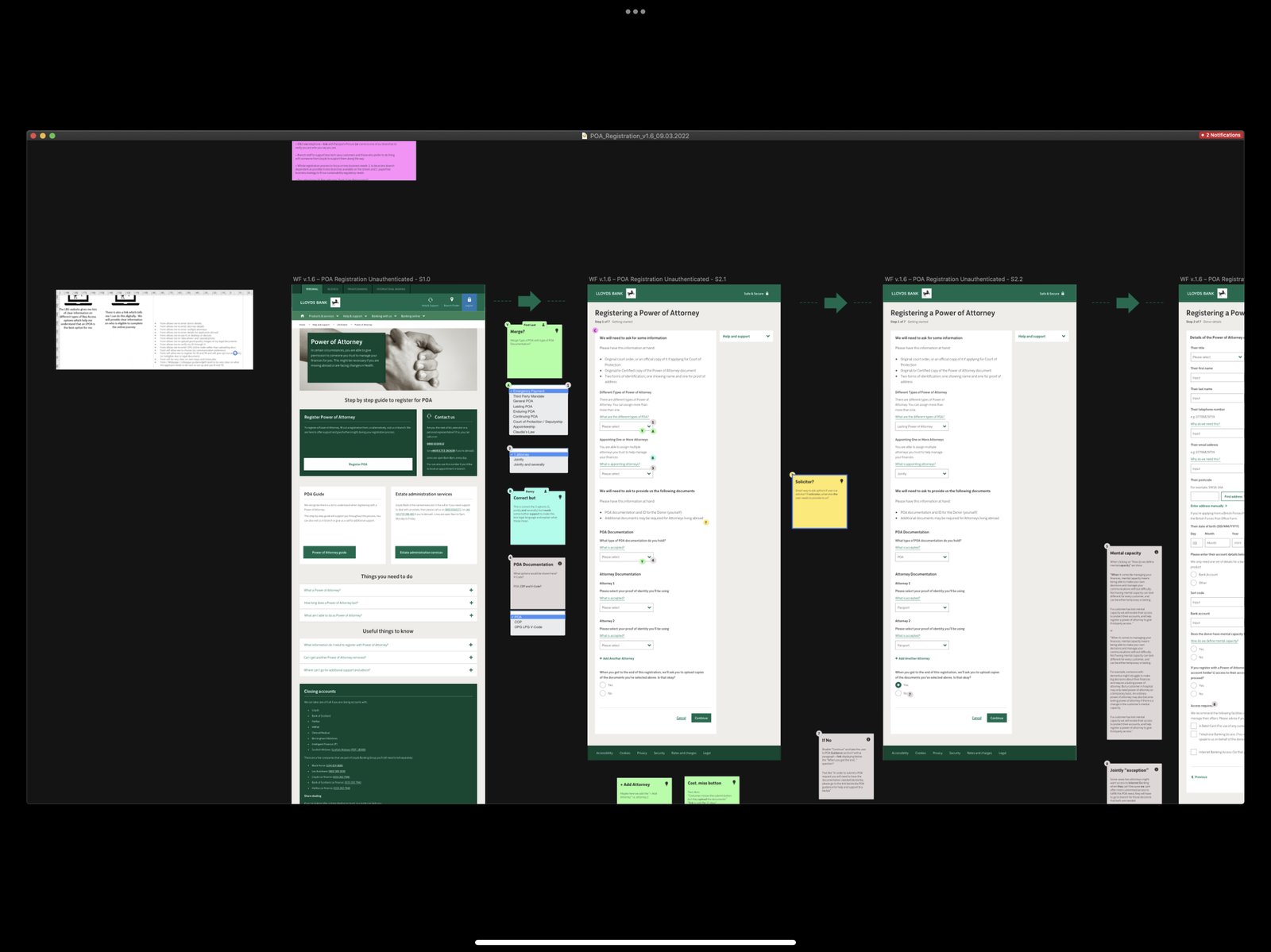
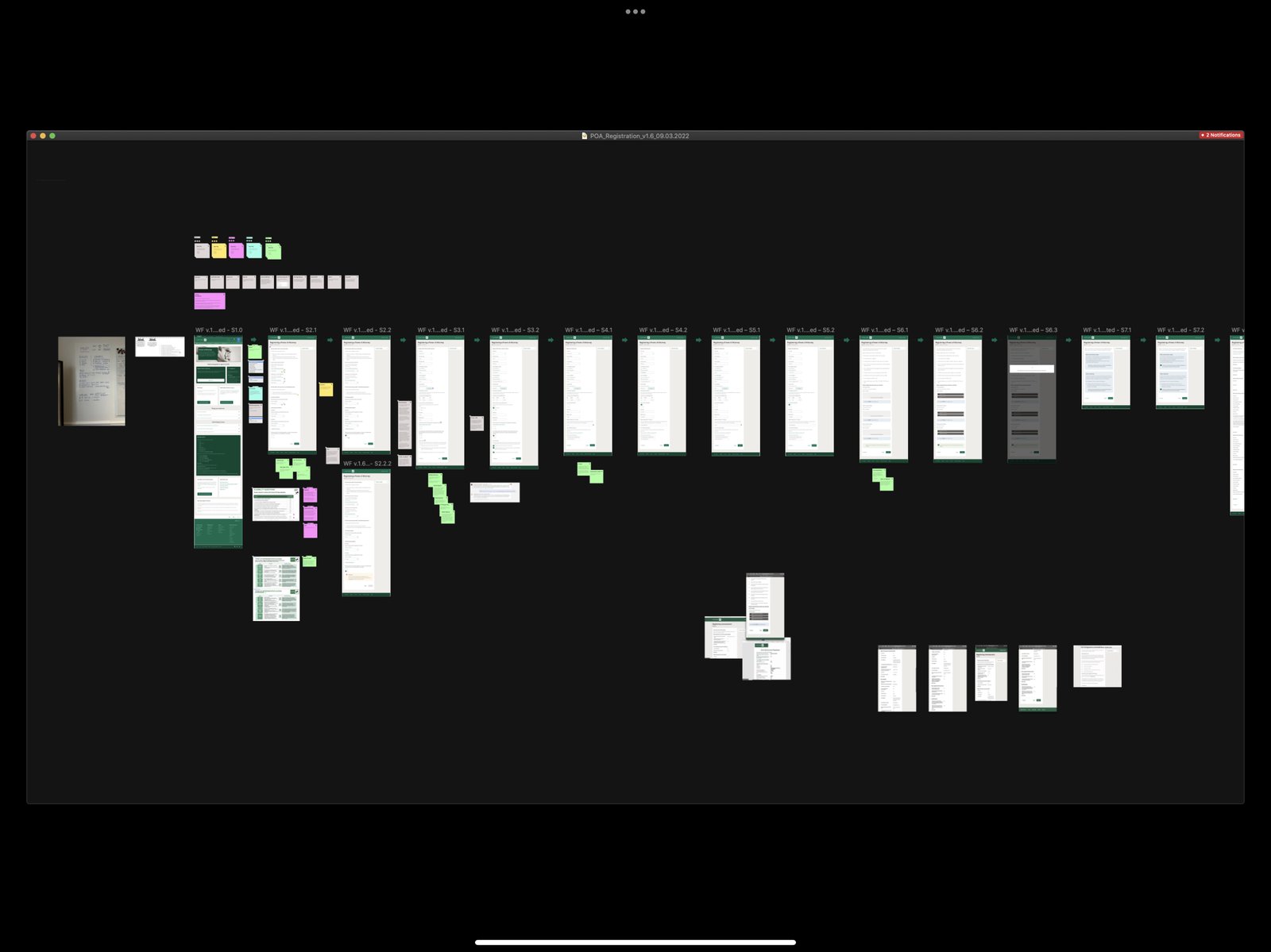
Designed a step-by-step journey with dynamic forms that adapt to the attorney type, the number of attorneys, and the kind of POA being registered. Inline guidance at every legal pivot, plain-English explanations, and clear progress.
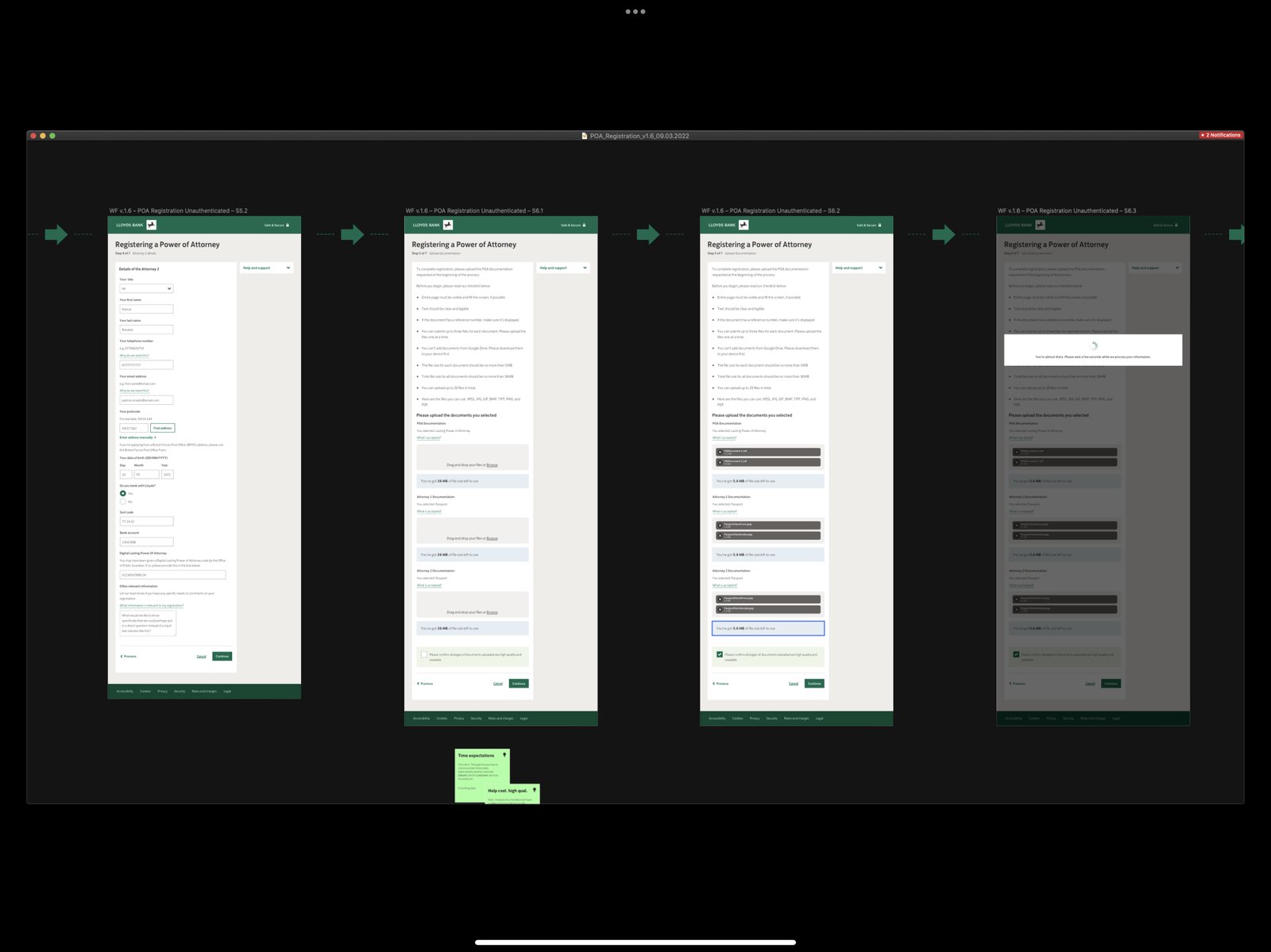
Integrated secure document upload for court orders, POA registrations, and supporting legal documents. Built for resilience — no customer gets to the end of the flow only to find their upload failed silently.
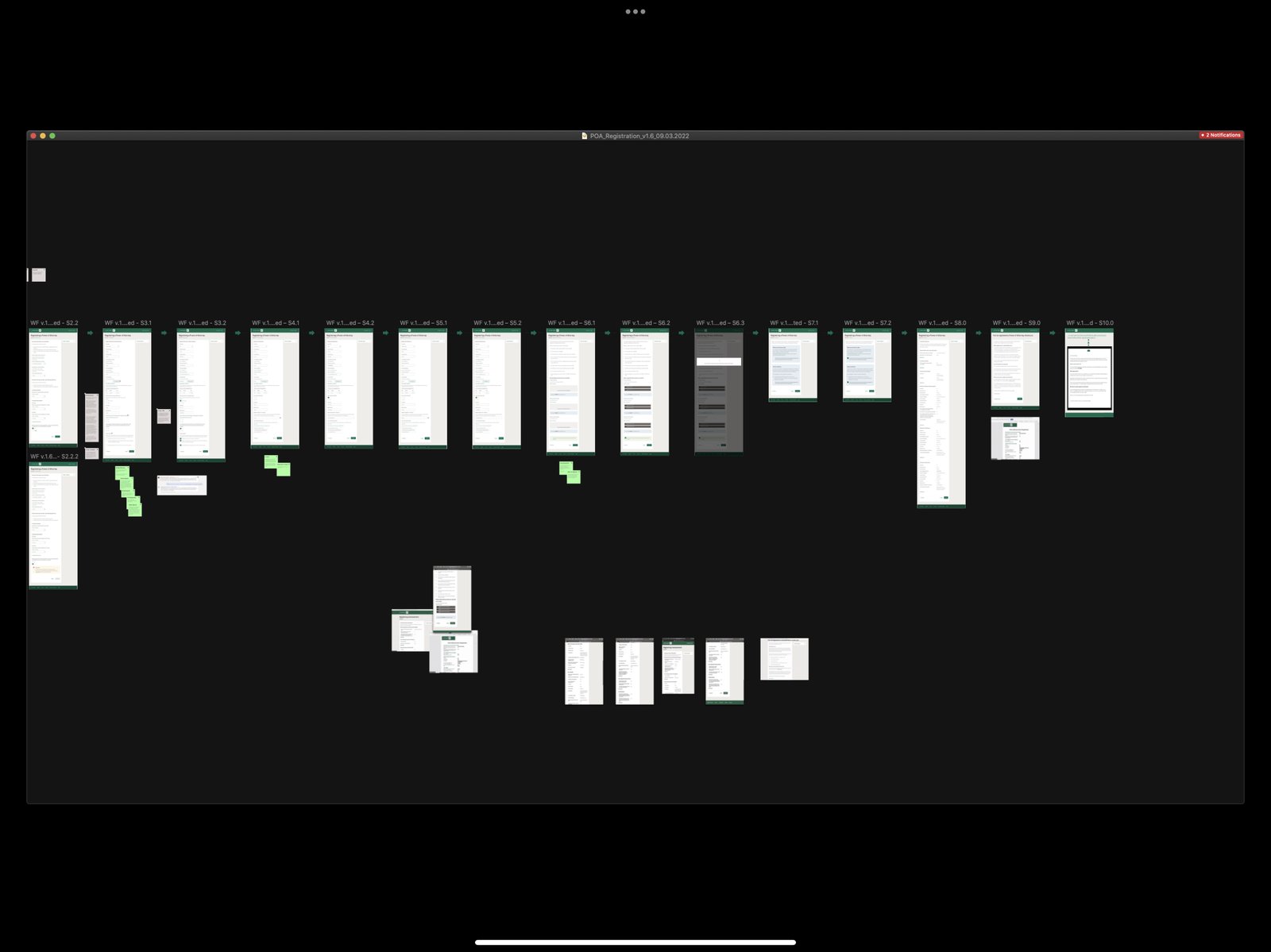
Delivered the full flow against Lloyds' internal design system — every screen, every error state, every regulator disclosure. Pixel-perfect handoff so the engineering team could build without guessing.
Paper forms feel neutral. They are not. They are what you ask someone to fight with on the worst day of their family's year. — Engagement reflection
Selected screens from the Register Power of Attorney flow — guided steps, dynamic forms, secure document upload.

Internal regulated tool — specific performance metrics are not publicly disclosed.
The Power of Attorney flow is the kind of project that makes you very clear about what tone a product voice should have. Every word on the screen has to land for a customer who is already carrying a lot. Every dynamic form branch has to anticipate their next legitimate question. Every error state has to recover, not scold.
Alongside this work I was the internal champion for Design Systems and Design Thinking within Lloyds Fraud and Disputes — embedding consistent practice, cross-team collaboration, and user-centered methods across the department. Read 5 referrals from this role on LinkedIn →