
Project 01b
Lia Live
Real-time simultaneous interpretation — dual interfaces for clients and interpreters.
This case study is gated. Enter the access key to view Lia Live in full. Access persists for the rest of this session.
Real-time simultaneous interpretation — dual interfaces for clients and interpreters.
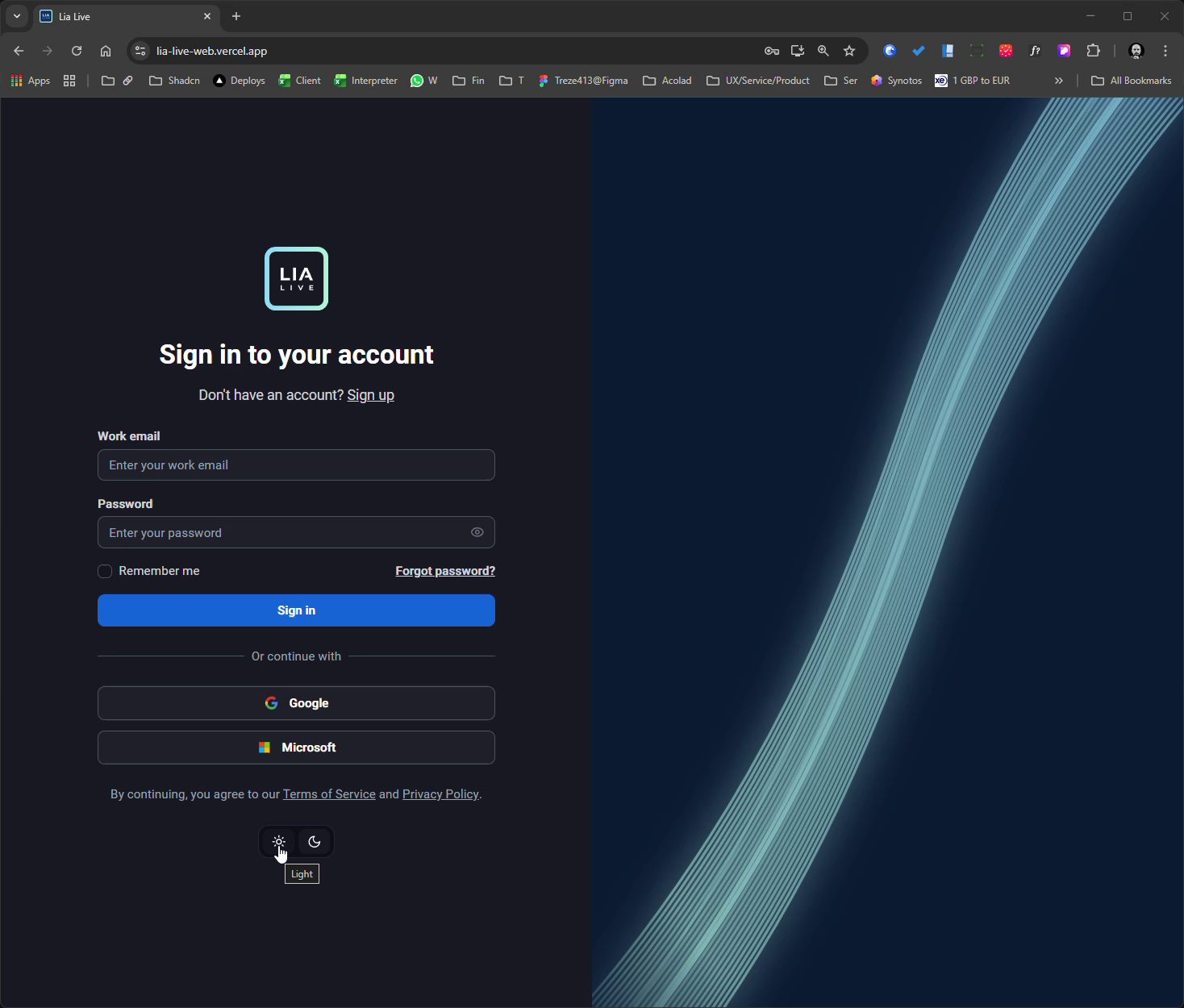
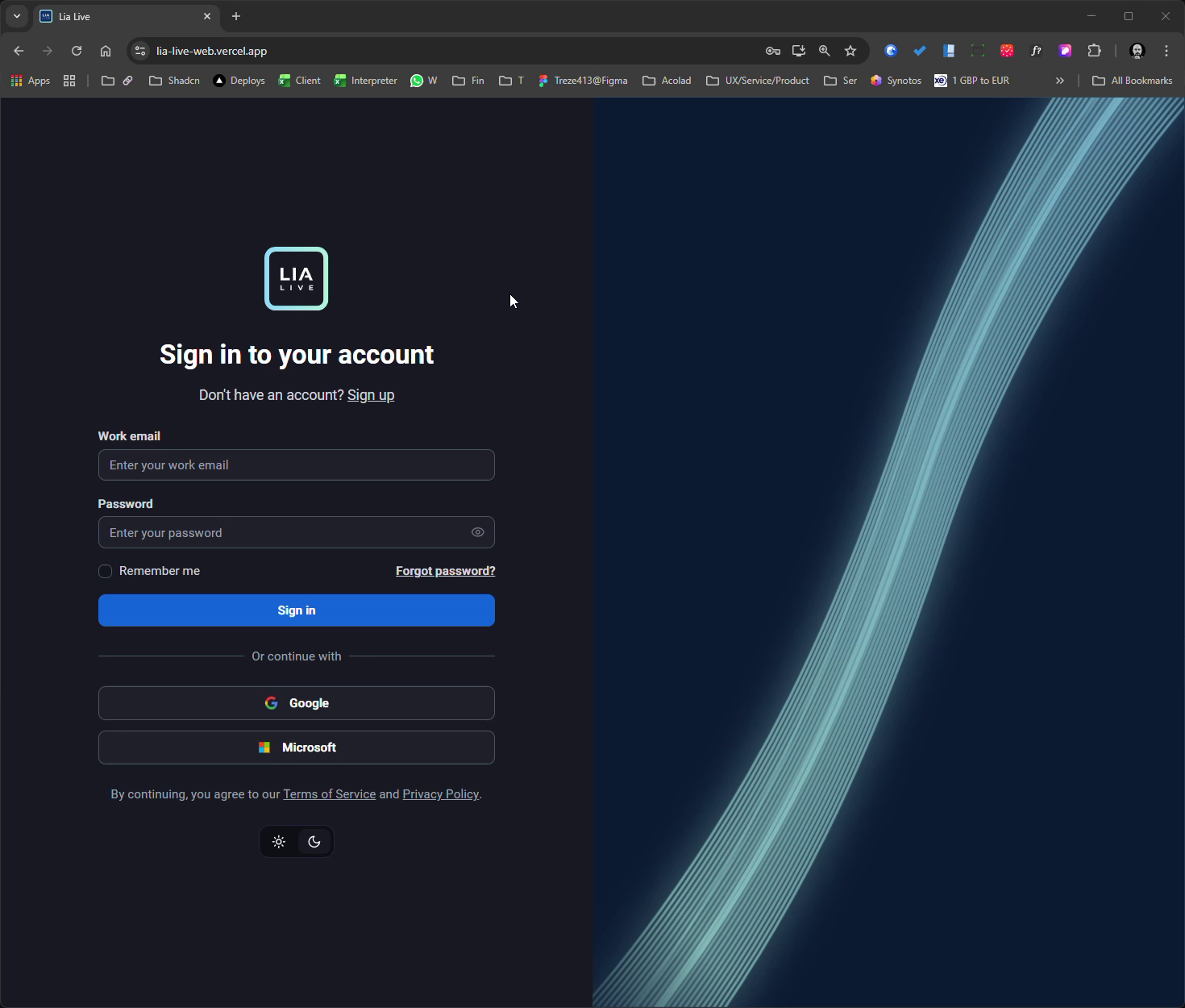
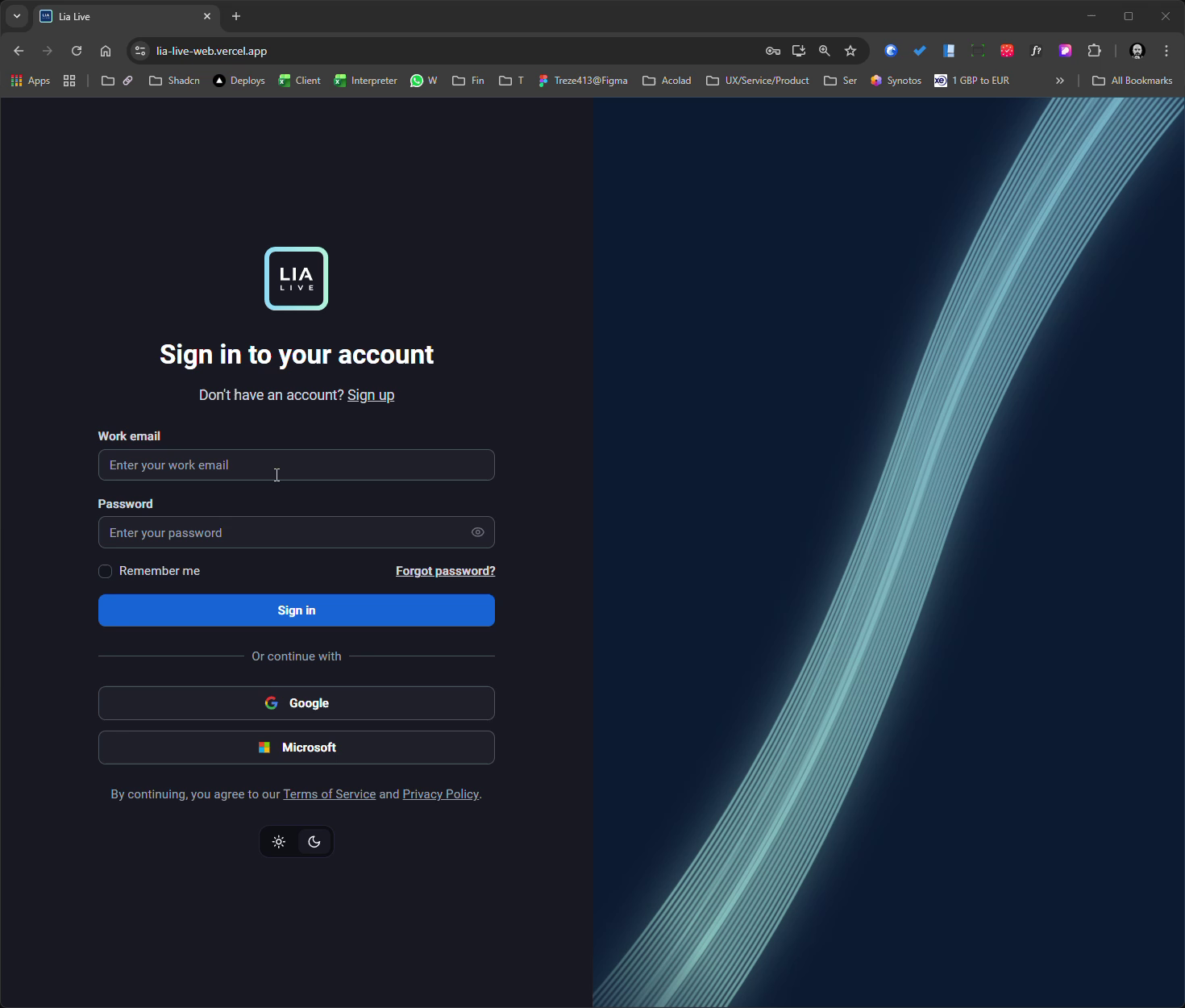
Lia Live is Acolad's web-based real-time simultaneous interpretation platform. No downloads, no plugins — professional interpreters connect with clients through the browser. Pedro designed two distinct interfaces: a streamlined Client experience for session joining and language selection, and a professional-grade Interpreter workspace for channel switching and audio management.
Two fundamentally different user roles sharing one platform. Clients need simplicity and zero friction. Interpreters need professional-grade controls and information density. These are opposing design forces.
The platform needed to feel like one product while serving two audiences. Visual language had to be shared, but information density and control surfaces had to diverge. Plus: brand identity for a new product within the Lia family.
Stakeholder sessions with interpreters and clients. Recorded video call with Niccola (stakeholder) to understand real-world interpretation workflows. Mapped the session lifecycle from both perspectives.
Dual-interface concept: shared visual language, divergent control surfaces. Established Lia Live brand identity (logo in positive, negative, neutral variants).
Client UI: minimal setup, language selection, session joining, real-time audio controls. Interpreter UI: channel switching, audio monitoring, session status, sustained-use optimization.
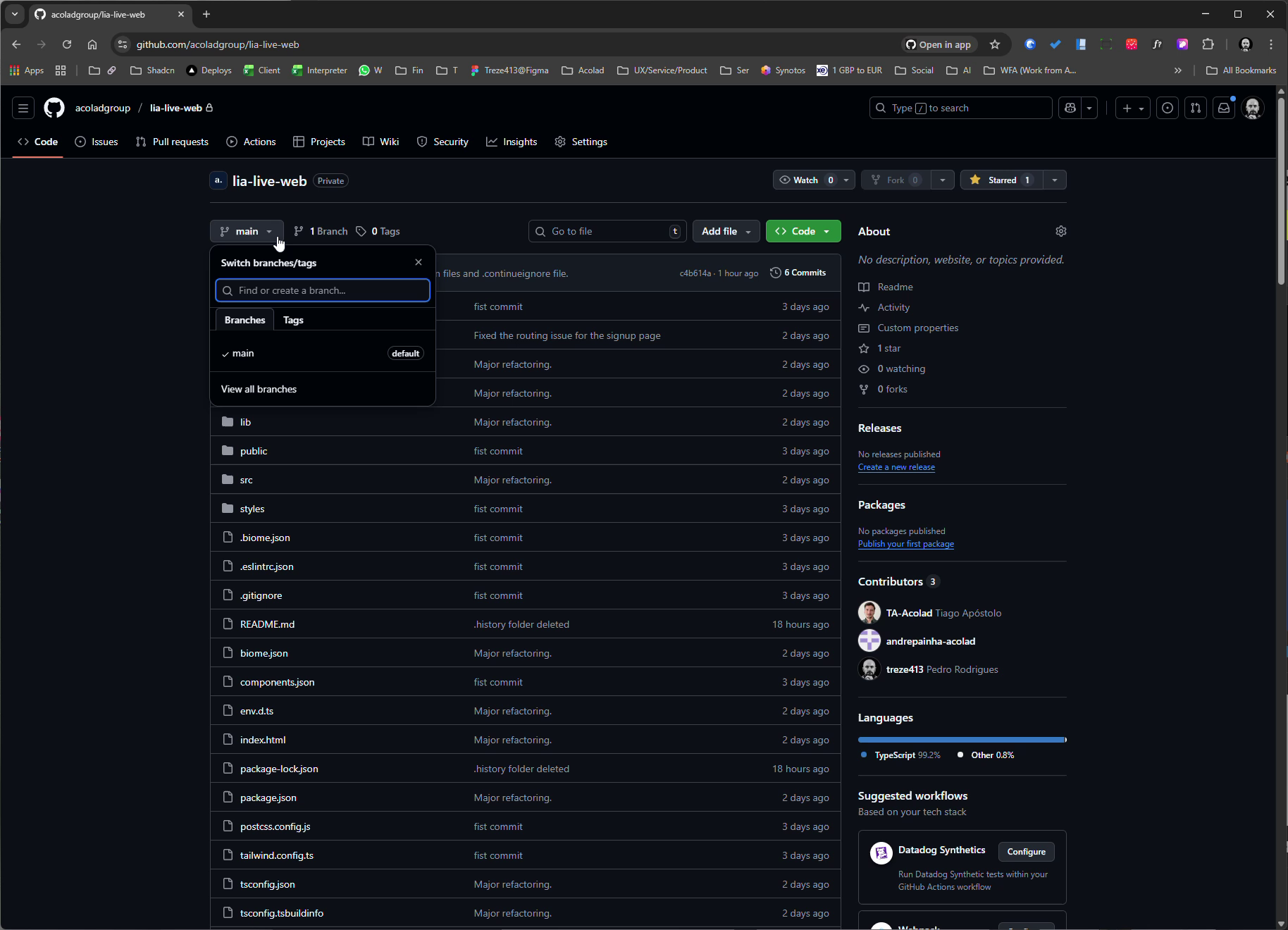
Collaborated with engineering on React + TypeScript implementation. Recorded client-side and interpreter-side demo walkthroughs. Documented the codebase on GitHub.

Designing for interpreters taught me that professional tools need density without clutter. Every pixel of screen real estate matters when someone is managing live multilingual channels. — Pedro Rodrigues
The dual-interface problem was deceptively hard. Early attempts tried to unify too much, resulting in a compromised experience for both roles. The breakthrough was accepting that shared visual language doesn't mean shared layouts. Interpreters need density; clients need calm.
Next time: prototype the interpreter workspace first, since it's the harder constraint, then derive the client experience from that foundation.